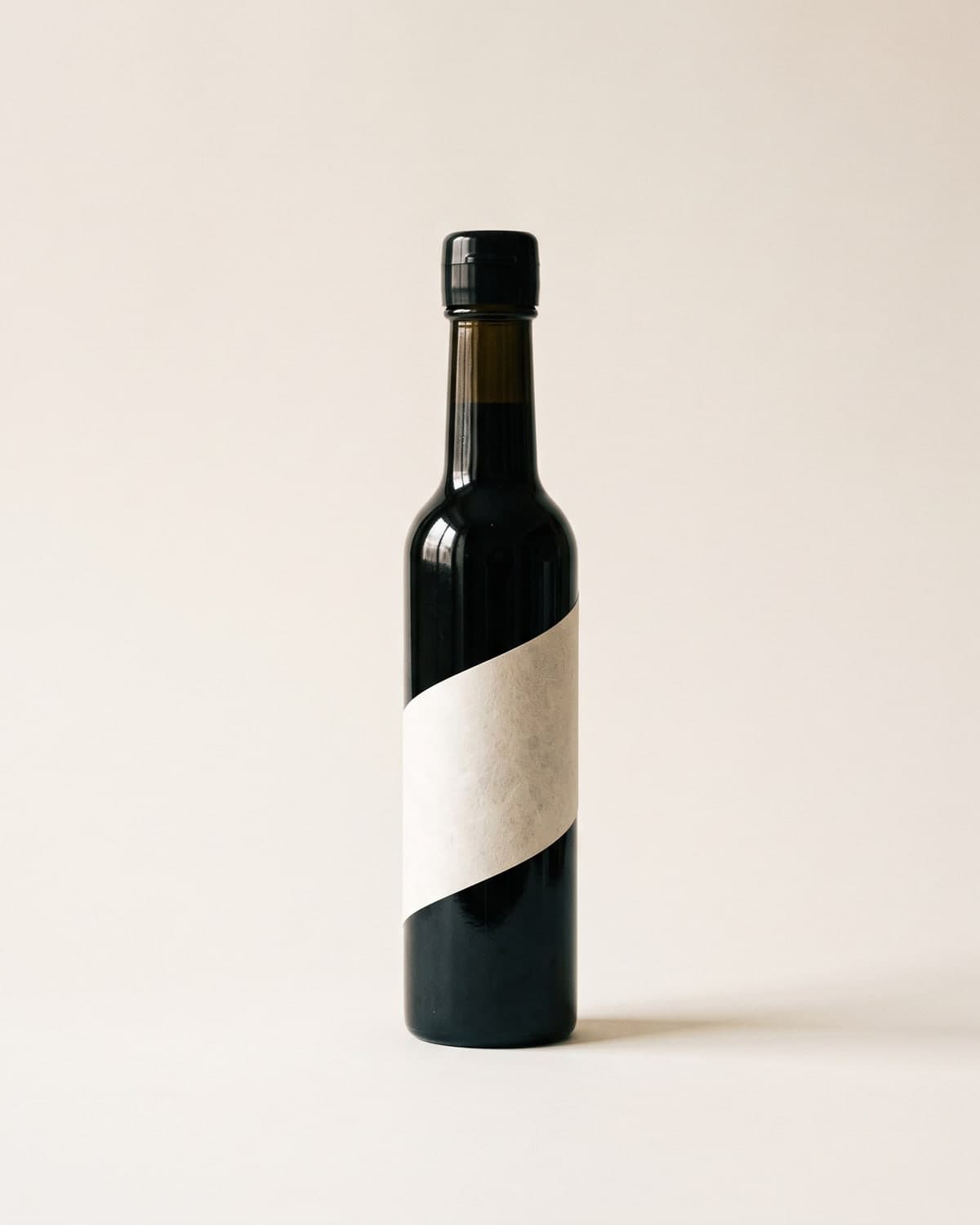
Soybeans (Japan, non-GM), wheat (Japan), sun-dried sea salt
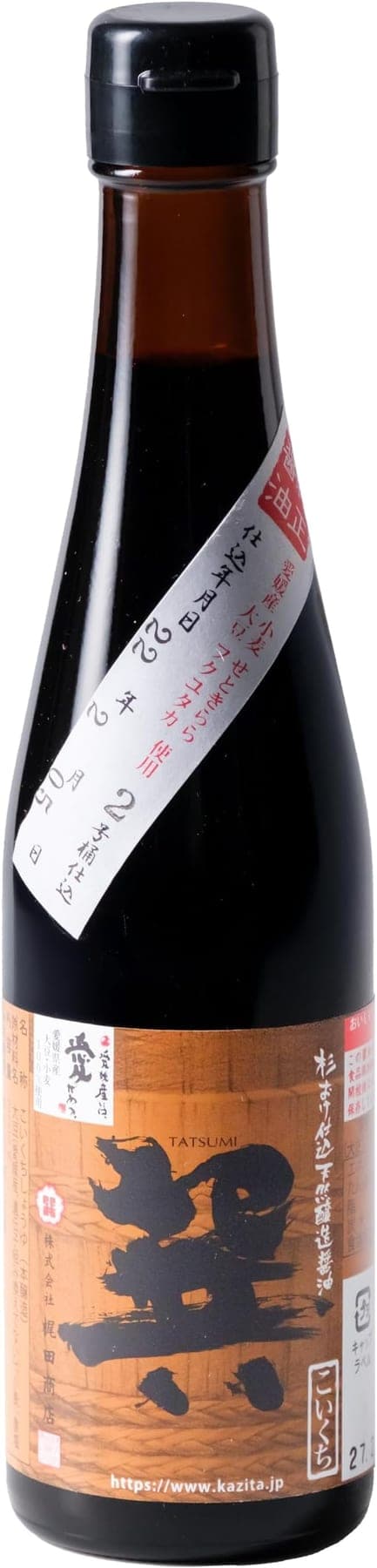
Tatsumi Jozo Cedar-Vat Soy Sauce, Two Years, 200ml
Two summers in a cedar vat in Yuasa, Wakayama
¥1,980tax included≈ $13
In stockGift-ready
We ship within Japan, and to your hotel.
18 April 2026 · Yuasa, Wakayama Prefecture
Four thousand litres a year, less than a day's output at an industrial plant, made over two years.

Yuasa, in Wakayama Prefecture, is generally credited as the birthplace of Japanese soy sauce. The story goes that in the Kamakura period someone used the liquid that pooled at the bottom of a barrel of kinzanji miso. At its peak the town had ninety-two soy sauce makers. It now has four.
Tatsumi Jozo is one of them, founded in 1912. Miwako Tatsumi, the fourth generation, left an advertising agency in Osaka and came back in 2011. Her father had collapsed, she says, and she was told that if nobody stirred the vats the mash would spoil within three days. That was the whole reasoning.
There are eighteen cedar vats in the brewery. The oldest is from the Meiji era, the newest was made in 1968. Each stands two metres tall and two across, holding roughly 6,000 litres. Only a handful of coopers in the country can still build them, so repairs go to a barrel-maker in Osaka. Re-tightening the hoops on one vat costs 800,000 yen, she says, an expense that comes round once every twenty years.
Inside each vat is a living layer of microbes, and it is never scrubbed. Once a year, after the mash comes out, it gets rinsed with hot water and nothing more; scouring it changes the flavour. Replace a vat, she says, and it takes three years to get the old taste back, so they use them until they fall apart.
Making it starts by steaming soybeans, roasting and cracking wheat, and inoculating both with koji. Three days later the koji is ready, it is mixed with salt water into a mash, and the mash goes into a vat. After that the roof stays open and the mash takes whatever the summer and winter bring. Nothing is heated, nothing is cooled.
In summer the surface foams. Twice a week a six-metre wooden paddle goes in and the mash is turned from the bottom. The work is done standing on the rim, and since Miwako cannot reach from there, they built a platform. Stirring one vat in July or August takes twenty minutes; eighteen vats takes the whole morning.
It is pressed after the second summer. The mash is wrapped in cloth, stacked, and only what falls under its own weight is collected. Pressing would double the yield and add harshness, so they do not press. Output is around 4,000 litres a year, about 5,500 bottles at 720ml. It is never pasteurised, so the microbes are still alive in the bottle.
She does not claim the method is correct. The efficiency is appalling, she says. But someone pours it over sashimi, says that it tastes different, and comes back the following year, and the number of people who do that is what 4,000 litres a year means.
Tatsumi Jozo
Soybeans (Japan, non-GM), wheat (Japan), sun-dried sea salt
Two summers in a cedar vat in Yuasa, Wakayama
¥1,980tax included≈ $13